
Watch for this
The loudest claim becomes the working conclusion.
Pause here before confidence becomes a decision.
Public trust and shared decisions
For people helping communities reason through public claims, competing needs, limited evidence, and visible consequences.
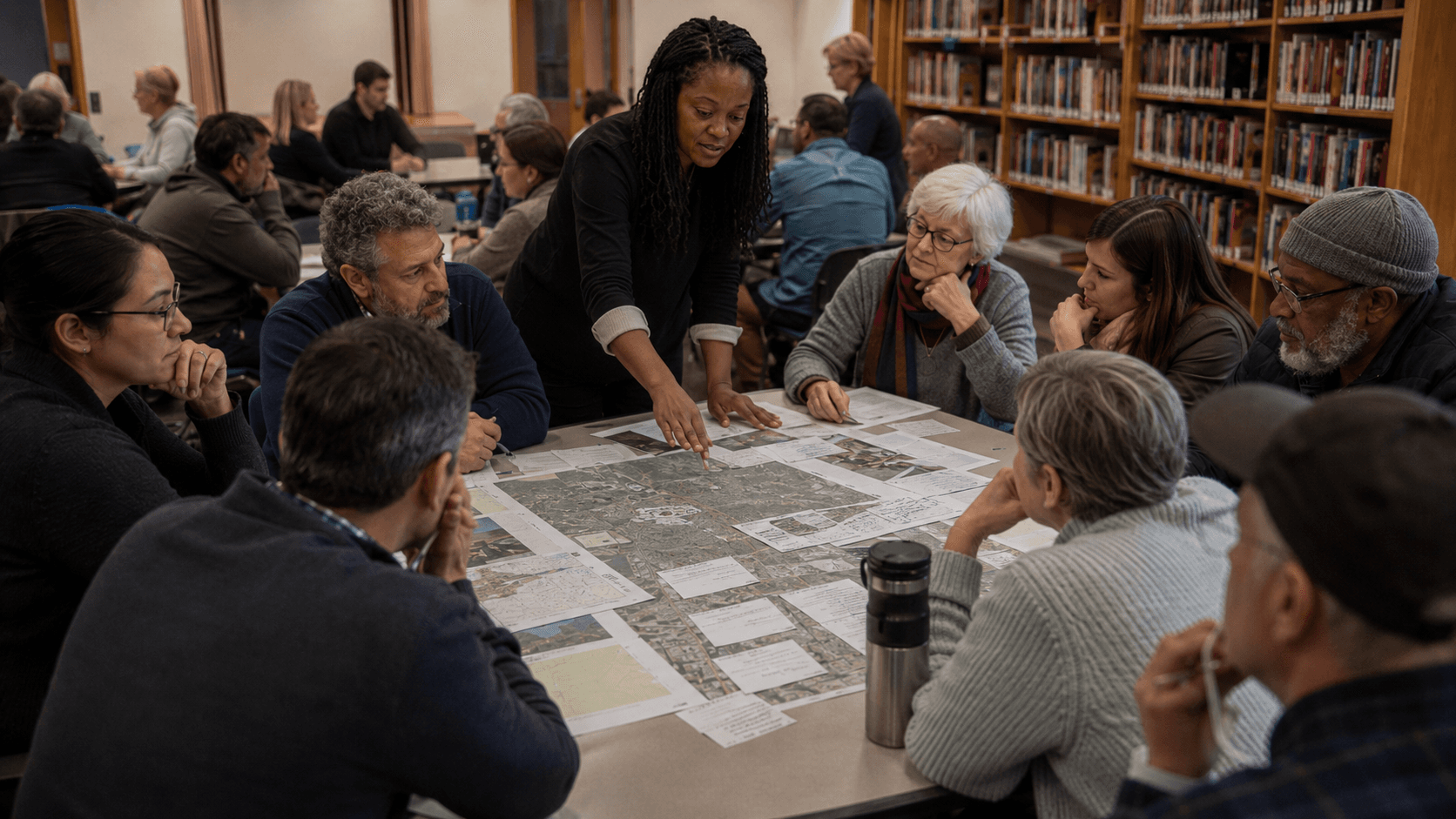
A community faces a claim about safety, schooling, housing, health, funding, or local priorities. People bring facts, stories, fear, values, and distrust into the same room.
WhyDive helps by making the movement from evidence to action visible. The goal is not to replace professional wisdom, spiritual discernment, leadership experience, or technical expertise. The goal is to help each of those forms of responsibility carry evidence honestly.
Where Judgment Breaks Down
In this space, weak judgment usually begins when a conclusion becomes stronger than the evidence that supports it.
Watch for this
Pause here before confidence becomes a decision.
Watch for this
Pause here before confidence becomes a decision.
Watch for this
Pause here before confidence becomes a decision.
These questions are designed for real conversation, not private reflection only. Use them with the people who share responsibility for the judgment.
What WhyDive Offers
WhyDive offers language, questions, and practices that help people carry evidence into judgment without pretending that evidence alone can do every part of the work.
Framework use
Use this to make the reasoning path visible.
Framework use
Use this to make the reasoning path visible.
Framework use
Use this to make the reasoning path visible.
Practice Moves
These are simple ways to begin using the framework without waiting for a formal program, product, or training.
Practice
Small enough to try now, strong enough to change the conversation.
Practice
Small enough to try now, strong enough to change the conversation.
Practice
Small enough to try now, strong enough to change the conversation.
Use This Page
The framework becomes more useful when it is tested inside real classrooms, congregations, teams, institutions, and communities.